
NISA ko real purpose: quick profit haina, long-term asset building ho
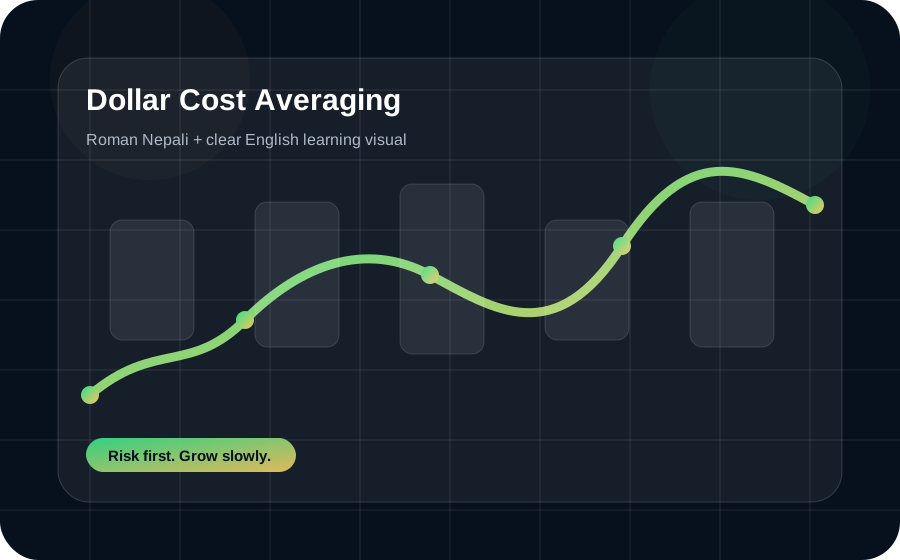
NISA lai FX jasto short-term trading account sochnu hudaina. NISA ko main point tax advantage bhitra long-term investment garna saknu ho. Beginner le yaha bata sabai bhanda important kura sikcha: market ko exact bottom guess garnu bhanda time in the market dherai powerful huna sakcha. Tapaile harek mahina fixed amount invest garnu bhayo bhane, market high huda kam units kincha, market low huda dherai units kincha. Yo process lai dollar-cost averaging, Japanese context ma tsumitate style investing bhaninchha.
Dollar-cost averaging kina important cha
DCA le loss guarantee garera hataudaina. Tara it reduces the pressure to predict perfect timing. Beginner haru ko sabai bhanda thulo problem ho: price badhe pachi FOMO, price ghate pachi fear. DCA le emotion lai rule ma badalcha. Rule simple: amount fixed, schedule fixed, product diversified, horizon long. If market down bhayo bhane pani plan continue garna milcha, because lower price ma more units accumulate huncha. But this only makes sense when product broad and long-term suitable cha, like diversified index fund; single risky stock or leveraged product ma DCA blindly garnu dangerous huncha.
| Month | Price idea | 30,000 yen buys | Beginner lesson |
|---|---|---|---|
| Month A | High price | Fewer units | Do not feel late; just follow plan |
| Month B | Lower price | More units | Down market can become accumulation chance |
| Month C | Recovery | Existing units recover | Long horizon matters more than daily noise |
Beginner ko NISA product selection framework
Popular product names change over time, ranking change hunchha. Tesaile product name matra follow nagari logic bujhnu parcha. Japanese investors le dherai herne category haru: global equity index, US S&P500 index, developed country index, balanced fund. Important points: low fee, broad diversification, no-load, long track record, understandable asset class, and NISA eligible. Product kina cha bhanda product ko structure bujhnu first.
FX ra NISA ko role completely different cha
FX le market reading, risk management, short-term discipline sikauchha. NISA le patience, compounding, tax advantage, long-term habit sikauchha. Tapaiko money plan ma duitai huna sakcha, tara same account size ra same risk thinking use garnu hudaina. NISA ma leverage chaina, FX ma leverage cha. NISA ma monthly fixed investment can work, FX ma fixed monthly loss tolerance important cha.
Step-by-step NISA routine
1) Emergency fund separate garne. 2) Monthly invest amount decide garne. 3) Broad index fund shortlist garne. 4) Fee check garne. 5) Rakuten Securities, SBI Securities, bank or other licensed broker ma account options compare garne. 6) Auto tsumitate set garne. 7) Every month price herera panic nagarne. 8) Once or twice a year allocation review garne.
- Do not borrow money to invest.
- Do not switch product every week.
- Do not stop only because market is red.
- Do not put emergency money into long-term investment.
NISA ko real purpose: quick profit haina, long-term asset building ho
NISA lai FX jasto short-term trading account sochnu hudaina. NISA ko main point tax advantage bhitra long-term investment garna saknu ho. Beginner le yaha bata sabai bhanda important kura sikcha: market ko exact bottom guess garnu bhanda time in the market dherai powerful huna sakcha. Tapaile harek mahina fixed amount invest garnu bhayo bhane, market high huda kam units kincha, market low huda dherai units kincha. Yo process lai dollar-cost averaging, Japanese context ma tsumitate style investing bhaninchha.
Dollar-cost averaging kina important cha
DCA le loss guarantee garera hataudaina. Tara it reduces the pressure to predict perfect timing. Beginner haru ko sabai bhanda thulo problem ho: price badhe pachi FOMO, price ghate pachi fear. DCA le emotion lai rule ma badalcha. Rule simple: amount fixed, schedule fixed, product diversified, horizon long. If market down bhayo bhane pani plan continue garna milcha, because lower price ma more units accumulate huncha. But this only makes sense when product broad and long-term suitable cha, like diversified index fund; single risky stock or leveraged product ma DCA blindly garnu dangerous huncha.
| Month | Price idea | 30,000 yen buys | Beginner lesson |
|---|---|---|---|
| Month A | High price | Fewer units | Do not feel late; just follow plan |
| Month B | Lower price | More units | Down market can become accumulation chance |
| Month C | Recovery | Existing units recover | Long horizon matters more than daily noise |
Beginner ko NISA product selection framework
Popular product names change over time, ranking change hunchha. Tesaile product name matra follow nagari logic bujhnu parcha. Japanese investors le dherai herne category haru: global equity index, US S&P500 index, developed country index, balanced fund. Important points: low fee, broad diversification, no-load, long track record, understandable asset class, and NISA eligible. Product kina cha bhanda product ko structure bujhnu first.
Beginner story
Imagine tapaile Japan ma salary paunu huncha, family lai support garnu huncha, ani future ko lagi asset banauna chahanu huncha. NISA, iDeCo and Dollar-Cost Averaging ko lesson practical cha: first understand, then start small, then record everything. Knowledge bina action dangerous; action bina knowledge also useless. Balance chahinchha.
Do this today
Aaja nai one small action gara: ek note bana, 3 terms learn gara, one screenshot save gara, or one calculation practice gara. Investing skill overnight bandaina; small repeated action le financial confidence banauchha.
- Read slowly, not emotionally.
- Keep a personal money notebook.
- Do not copy trades or products blindly.
- Ask official source or professional when tax/legal/visa is involved.
Common mistake
Beginner haru often information lai shortcut banauna khojcha. YouTube, SNS, friend signal, popular product, or EA result herera immediately money halnu risky cha. First ask: what is the risk, where is the record, what is the rule, what happens if I am wrong?
Action checklist
Page finish garepachi check gara:
- Main idea one sentence ma explain garna sakchu?
- Risk point bujhe?
- My next action small cha?
- Record keep garne method cha?
- If unsure, official source herne plan cha?
EA bridge: why this lesson matters before automation
Yo page ko concept direct EA use sanga connected cha. EA le order automatically open/close garna sakcha, tara EA lai safe banaune kura user ko understanding ho: leverage, spread, support-resistance, news, VPS, tax record and stop rule. Tesaile every topic secretly prepares you for automation later.
- If you cannot explain this page, do not increase lot.
- If you cannot record this page concept in journal, do not run EA live.
- If you want EA later, learn platform and VPS next.
How to move from learning to EA safely
The safe path is: learn the concept, practice manually or demo, record mistakes, understand tax/legal side, then test EA. A good EA page should always remind user: no guarantee, high risk, small lot first, and monthly records always.
- Read MT4/MT5 guide.
- Read VPS guide.
- Read 1000x leverage page.
- Add LINE if you need setup checklist before using EA.
Dollar-cost averaging: why monthly buying matters
DCA means fixed amount, fixed schedule, long horizon. Example: every month 30,000 yen into a broad index fund. When price is high, you buy fewer units. When price is low, you buy more units. Beginner does not need to guess perfect bottom. This habit is powerful because emotion becomes rule.
| Market month | Price feeling | DCA behavior | Beginner meaning |
|---|---|---|---|
| Market high | Everyone excited | Buy fewer units | Do not chase too much |
| Market down | Everyone scared | Buy more units | Downturn can be accumulation |
| Recovery | Confidence returns | Old units recover | Time and patience matter |
NISA is slow wealth, not fast cashflow
NISA can help build assets slowly. But it usually does not create fast income tomorrow. That is why this site also teaches active market skill and EA safety. The difference is important: NISA is long-term base, FX/Gold is high-risk opportunity skill, EA is automation after knowledge.
- Use NISA for long-term asset base.
- Use FX/Gold only with risk money.
- Use EA only after understanding strategy and VPS.